
Table of Contents
If you’re doing business online, you likely have a general idea of what an IP address is.
IP stands for Internet Protocol which in layman’s terms, is a string of numbers that identifies your website. For example, a standard IP address would look like this: 201.53.217.160.
What you may not know, however, is that IP addresses are classified into two types.
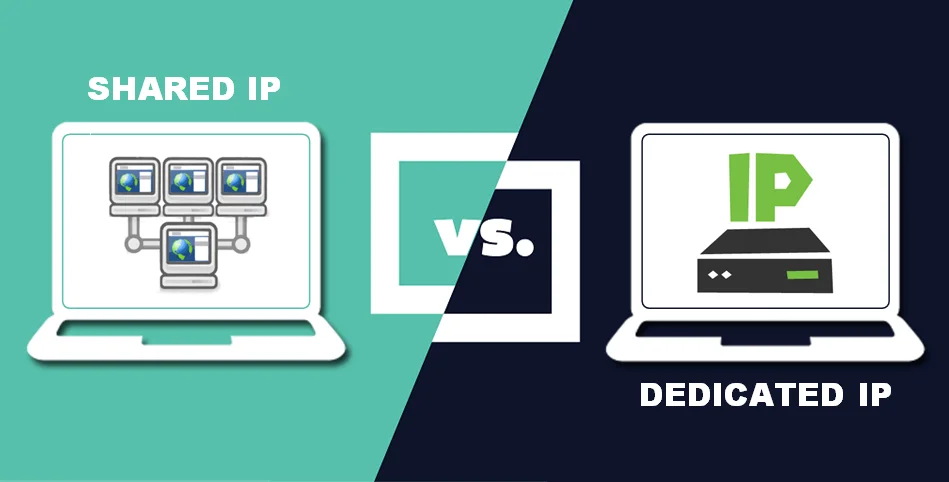
Dedicated IP addresses only identify a single website, whereas shared IP addresses identify several websites sharing the same IP address.
Not sure which one is the best for you? Keep reading and find out the benefits and differences between a dedicated and a shared IP address, as well as their impact on your website.
Key Takeaways
- A dedicated IP address is a unique internet address assigned exclusively to your domain. Some of the biggest benefits of using it include:
- Better performance
- Increased access
- Improved connectivity
- Easier troubleshooting
- A shared IP address is an IP address that’s shared between several websites or domains. It is less expensive than a dedicated IP address, and it’s easier to build a good reputation with it.
- Choosing the right IP address type is important as it impacts your website’s speed and performance, security, SEO strategy, and mail delivery.
What is a Dedicated IP Address?
mply put, a dedicated IP address is a unique sequence of numbers that identifies your website.
In other words, a dedicated IP address is assigned specifically to your domain. It isn’t connected to or used by any other domains.
For example, if you were to type your dedicated IP address into your search bar instead of your website’s URL, your website would pop up on your Internet browser.
It’s also important to note that a dedicated IP address doesn’t necessarily mean that your website is hosted on a dedicated server. You can use a dedicated IP with different web hosting types.
What is a Shared IP Address?
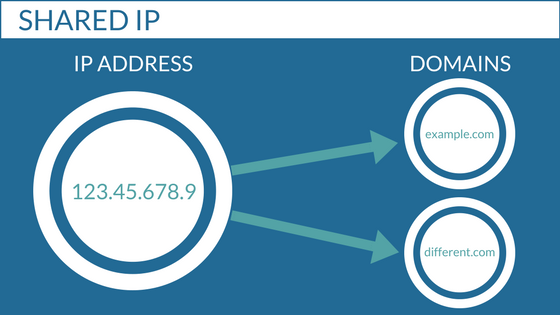
A shared IP address is a string of numbers that identifies several different websites.
For this reason, the actions of one domain can impact other domains (e.g. if one domain is sending spam, your shared IP address can get blacklisted, which affects all domains sharing the same IP address).
More often than not, if you’re using shared hosting for your website, the hosting provider will assign it a shared IP address.
That said, shared hosting and a shared IP address aren’t mutually inclusive. You can also opt for a dedicated IP address with shared hosting.
Differences Between Using a Dedicated IP vs Shared IP Address?
Here are the main differences between using a dedicated IP address and a shared IP address you should be aware of:
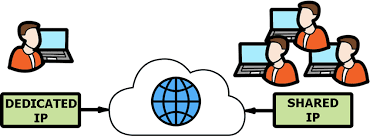
- Number of domains. While a dedicated IP address identifies a single domain, a shared IP address identifies multiple domains.
- Other domain activity. If you’re using a shared IP address, your IP address reputation depends on the activity of all domains connected to that IP address. With a dedicated IP address, on the other hand, you’re in control of your IP address reputation.
- Software. Although it happens rarely, some software may require you to use a dedicated IP address.
- Price. Once you sign up for a hosting service, a shared IP address comes free of charge as part of the hosting plan. Using a dedicated IP address, however, costs a monthly fee.
Benefits of a Dedicated IP vs Shared IP Address

Choosing between a dedicated IP address and a shared IP address depends on various factors, and each has its own set of benefits. Here are some advantages of a dedicated IP address compared to a shared IP address:
Dedicated IP Address:
- SSL/TLS Certificates:
- Required for some older web browsers that do not support Server Name Indication (SNI), allowing you to use SSL/TLS certificates for secure connections.
- Email Deliverability:
- May improve email deliverability, as your email reputation is not affected by the actions of other users sharing the same IP. This can be crucial for businesses relying on email communication.
- Server Access:
- Facilitates direct access to your server using the IP address, which can be beneficial for certain applications, protocols, or troubleshooting scenarios.
- Improved Performance:
- In some cases, a dedicated IP may lead to better performance, as your website or application is not affected by the traffic or behavior of other users on the same IP.
- Application Compatibility:
- Some applications or scripts may require a dedicated IP for proper functionality, particularly if they rely on IP-based authentication or tracking.
Shared IP Address:
- Cost-Effective:
- Shared hosting with a shared IP is often more cost-effective, making it a popular choice for small websites or individuals with budget constraints.
- Ease of Management:
- Simpler to manage and set up, especially for those who are less experienced with server configurations. Shared hosting providers usually handle IP address management.
- Server Resource Efficiency:
- Hosting multiple websites on the same IP can be more resource-efficient, as the server can distribute resources based on demand. This is especially true in virtual hosting environments.
- Widespread Adoption:
- Shared IP addresses are widely supported and accepted, and many websites and applications function perfectly well with shared hosting.
- Easier Scaling:
- Scaling up or down is often more straightforward in a shared hosting environment, making it suitable for websites with fluctuating traffic.
How Does Your IP Address Type Impact Your Website?
Here’s a quick breakdown of how using a dedicated or shared IP address can impact your website:
#1. Speed & Performance
A shared IP address doesn’t necessarily equal a slower speed and worse website performance.
Rather, your website speed and performance depends on other factors, such as your web hosting service.
For example, using shared hosting can decrease your website performance regardless of the IP address type you use. That’s because you’ll be sharing server resources with other websites.
#2. Security
Although a dedicated IP address used to be a necessity if you wanted to add an SSL certificate to your website, today it’s no longer the case.
You can encrypt your website with an SSL certificate if you’re using a shared IP address, too.
That said, your website security depends much more on your web hosting service type. While shared hosting is the least secure, dedicated hosting provides the most security for your website.
#3. SEO
In short, your IP address type has no impact on your SEO.
So, if you’re looking to improve your SEO, you should focus on other factors, such as content or page speed.
#4. Mail Deliverability
IP addresses with a good reputation have a better delivery rate and rarely, if ever, go to the spam folder.
In this case, a dedicated IP address can positively impact your mail deliverability. More often than not, it’s easier to manage your IP reputation when it doesn’t depend on the activity of other domains.
On the other hand, you should keep in mind that dedicated IP addresses used specifically for sending emails are only a good choice if you are a big-volume email sender. Unless you are sending 100,000+ emails per month, you should not use a dedicated IP address.
#5. Pricing
Your hosting provider will assign you a shared IP address without any additional fees.
While some hosting plans include a dedicated IP address, it usually comes as a paid add-on.
The price of a dedicated IP address depends on the hosting provider. You can expect to pay from a few dollars to $100+ per month for a dedicated IP address.
Which Type of IP Should You Use?
The decision on whether to use a dedicated or shared IP address depends on various factors, including the specific requirements of your website, your budget, and your technical preferences. Here are some guidelines to help you decide:
Use a Dedicated IP Address When:
- SSL/TLS Certificates Require It:
- If your website needs SSL/TLS encryption and you have users accessing it with browsers that don’t support Server Name Indication (SNI), you may need a dedicated IP for each SSL/TLS certificate.
- Email Deliverability is Critical:
- If your website relies heavily on email communication, having a dedicated IP can help maintain a positive email reputation, as your deliverability won’t be affected by the actions of other users.
- Specific Server Access Requirements:
- Certain server configurations or applications may require direct access through a dedicated IP. If you have specific server-side requirements, a dedicated IP might be necessary.
- Application Compatibility:
- Some applications or scripts may function more reliably with a dedicated IP, particularly if they rely on IP-based authentication or tracking.
Use a Shared IP Address When:
- Cost is a Major Consideration:
- Shared hosting with a shared IP is generally more cost-effective. If you are on a tight budget, shared hosting might be a more economical choice.
- Simplicity and Ease of Management:
- If you are not experienced with server configurations or don’t want to deal with IP address management, shared hosting with a shared IP is usually simpler to set up and manage.
- Resource Efficiency:
- Shared IP addresses can be more resource-efficient, especially in virtual hosting environments, as server resources can be dynamically allocated based on demand.
- Widespread Adoption:
- For many websites and applications, shared hosting with a shared IP address is sufficient. It is widely supported and accepted, making it a convenient choice for a broad range of users.
- Easier Scaling:
- If your website’s traffic fluctuates and you need to scale resources up or down easily, shared hosting is often more flexible.
Consensus: Dedicated IP address or shared IP address
There are great benefits that can come with both a dedicated IP address and shared IP address.
Dedicated IP addresses can improve your website’s performance, accessibility for employees, and your business’s email delivery success rates. Shared IP addresses can help you save on monthly website costs and can work seamlessly for individual entrepreneurs or small businesses.
Whichever one you choose, evaluate your business needs and talk to your providers about your options. Then you’ll be able to make an informed decision on what is best for you and your business.
 uladminuser