
Table of Contents
What is domain renewal?
To put it simply, domain renewal is the act of prolonging the registration of your domain name.
Imagine your domain as the virtual address where your website resides. Domains are not owned outright but are instead leased from domain registrars. To ensure that your online home remains accessible, you must periodically renew your domain, similar to renewing a lease on physical property.
What is domain expiration?
Domain expiration — also called domain expiry — refers to when your domain registration reaches its limit and becomes void.
When you register your domain, you’re not really buying it — you’re effectively only leasing it. That lease comes with a time limit. When it reaches its expiration date, you either renew it or lose it.
How does domain expiry work?
When you register a domain name, you’ll pay to own that domain for a certain amount of time. Most domains come with a minimum registration period of one or two years. However, you can register it for longer than the minimum period, usually for up to 10 years at a time.
However long you lease your domain for, you should be told the expiration date at the time of purchase. When the expiration date approaches, your domain registrar should remind you to renew the domain.
If you don’t renew before the expiration date, there is still a grace period afterwards. Eventually, however, you’ll lose your domain.
How to check when your domain will expire
If you’re unsure when your domain will expire, there are a couple of ways you can check. The first is to simply contact your domain registrar or try to find documentation from when you registered your domain name. You were likely told the expiration date then, so you might be able to find it again.
If you don’t want to go digging for that info, though, don’t worry — there’s an easier way to check. You can simply use an online domain checker tool to find the expiration date.
What’s the Lifecycle of a Domain Name?
Domain names make the Internet a navigable place for the average consumer. Instead of typing long-stringed IP Addresses into your browser’s URL bar, all you have to do is type the domain name of a site, and you’re there.
The Domain Name System, or DNS, is managed by ICANN, the Internet Corporation for Assigned Names and Numbers. When you register a domain name, you’re registering it through an ICANN-accredited registrar, like unlimitedhostingplan. Your initial registration can be anywhere from one to ten years, depending on the domain and registrar.
Expired domain names can be very desirable. Once a domain has been registered and used, it can offer a history of established site traffic and backlinks — assets someone else might capitalize on. So, suppose you don’t renew your domain name before its registration period expires. In that case, you risk losing it either for a short time or for good.
Understanding the Domain Life Cycle
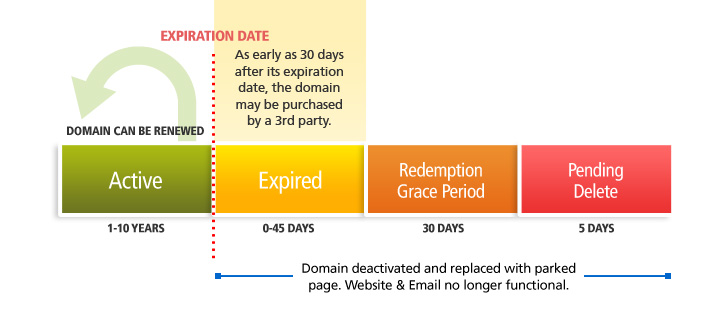
All domain names go through certain stages, from registration and expiration to being available again. These stages are known as the domain life cycle.
Understanding the cycle is important to know when you can renew your domain without paying more.
Active Domain Status
- Active domains are manageable domains. This means you can change the domain settings, modify contact information, and more. An active domain is essential for a functioning website and professional, custom email address.
- Registering a domain name makes it active, and that registration period can last anywhere from 1-10 years.
Expired Domain Status
- A domain name is classified as “expired” one day after its expiration date if not renewed.
- Any websites or email addresses associated with an expired domain will cease to function appropriately.
- Other parties may bid on and attempt to purchase the domain name as soon as it expires. Your claim to the domain takes priority over any 3rd party bids, meaning that if you renew within the 30 days post-expiration, you should have it returned to you.
Redemption Recovery/Grace Period
- After 30-45 days of remaining in an expired status, the domain name enters a Redemption Recovery or Redemption Grace period.
- Depending on the TLD, some domains may enter a redemption status the day after they expire.
Pending Delete
- At this stage in the domain lifecycle, you can consider it lost. A domain in the Pending Deletion status is no longer retrievable.
- Domains remain in the pending delete status for about five days before being released back into the public for new registration. After that, you can try to purchase and re-register it, but so can anyone else.
Domain name renewal tips

Here are some tips we’ve put together to try and help make life a little easier when managing your domains.
- Keep your renewal reminder notices turned on. If you turn them off and don’t have auto-renew set up, it could be a recipe for disaster. We’ll send an email 30 days before your domain is set to expire and again within 5 days of the day it expires.
- Set your domains to automatically renew. This way, you won’t have to worry about missing an email reminder in a potentially over-crowded inbox.
- Update any outdated billing information. If you lose your credit or debit card, or if it expires naturally, you don’t want to find yourself in a bind. Instead of risking the loss of your domain name, go through your statements to see what charges are there and update those services with your new card information.
- Consolidate, consolidate, consolidate! It’s not easy keeping track of multiple domain names with different expiration dates across different registrars. We recommend keeping your domains with one registrar where you can see them all in one place.
- Is your email address up to date? If it’s not, you’ll never receive any domain expiration reminder emails. If the domain is your own, make sure your email address isn’t associated with a school or business you no longer attend or work for.
 uladminuser